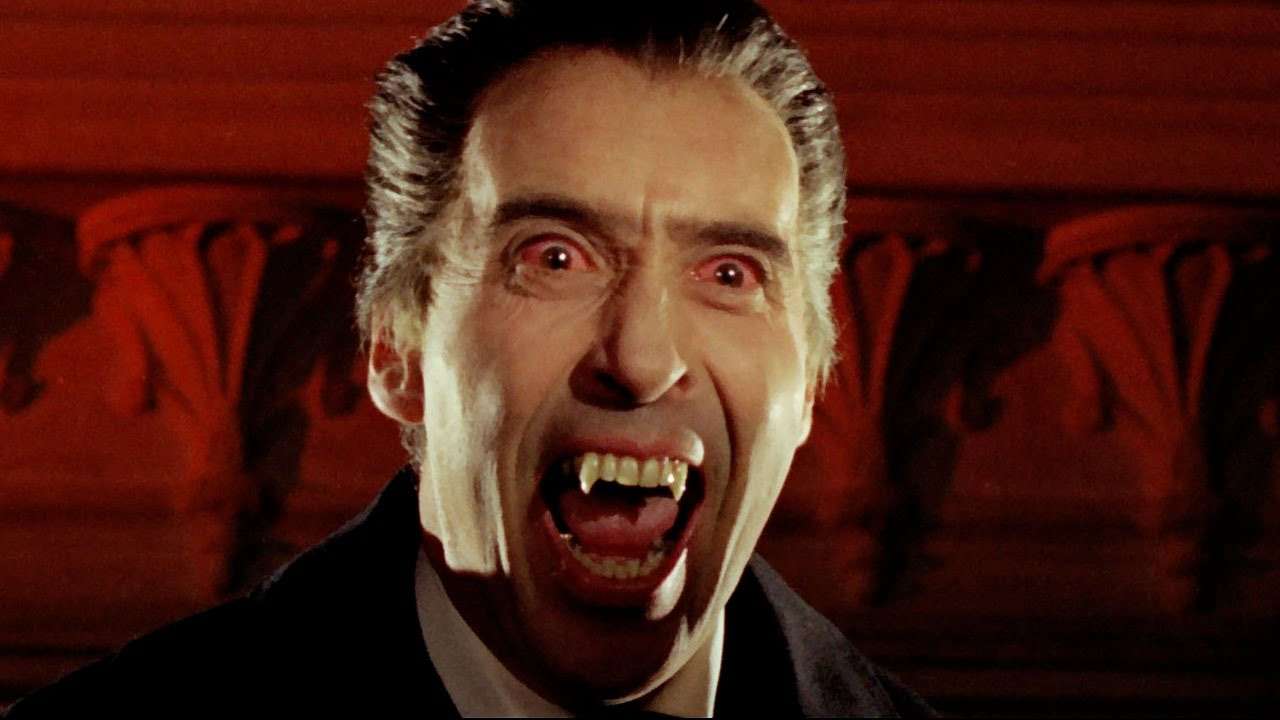
Dracula has risen from the grave once again. But has Hammer Films?
On 5 October, Hammer celebrated its restoration of Terence Fisher’s Dracula in Leicester Square. The red carpet was rolled out, the cameras flashed, and actors, filmmakers and familiar faces assembled to honour one of the great achievements of British horror cinema.
It was, by all accounts, a splendid occasion.
But while Count Dracula appears to be enjoying a particularly vigorous resurrection, I find myself wondering whether the same can really be said of the studio.
It is now three years since billionaire entertainment producer John Gore acquired Hammer. The announcement promised substantial investment and a new slate of films. For those of us working in British horror, the prospect of a properly financed Hammer returning to regular production was exciting.
Since then, we have witnessed an impressive revival of the brand. What I am still waiting for is a new British horror feature originated under this ownership and made here.
That distinction matters. Hammer has released films, supported filmmakers and invested in its catalogue. It would be wrong to pretend otherwise. But the question remains: when does the much-celebrated resurrection become a sustained programme of British filmmaking?
The Resurrection of a Brand
Let me begin by acknowledging what Hammer’s present management has accomplished.
The restorations of The Curse of Frankenstein and Dracula, together with the collector’s editions, archival material and theatrical screenings, deserve applause. These are magnificent films, and the people preserving them are doing valuable work.
I want future audiences to see Christopher Lee and Peter Cushing at their best. I also want those audiences to have new Hammer films worth discovering.
In October 2025, Hammer celebrated The Curse of Frankenstein with a West End premiere. A year later, it is Dracula’s turn. Hammer itself announced that succession.
Two grand occasions honouring two films made nearly seventy years ago.
There is nothing wrong with that. But a company can become very good at celebrating the films it once made without establishing much of a case for the films it intends to make next.
Hammer’s own description of its future refers to an ambitious slate of original film and television productions. I hope that promise bears fruit. Until it does, I think we are entitled to ask for something more concrete than another announcement that Hammer is back.
The £100 Million Question
In May, Screen International examined John Gore’s £100 million commitment to the British film industry.
An impressive figure. It also needs to be understood properly.
This concerns the wider John Gore Studios enterprise, rather than a dedicated £100 million fund for Hammer horror. The group has invested across production, restoration, distribution and other parts of the industry, and its work extends well beyond Hammer.
Those investments should not be dismissed simply because they have yet to produce the particular films I would like to see.
Nevertheless, they demonstrate that the organisation has access to resources most independent British filmmakers can only dream about.
An ambitious horror feature can be made for £1 million, £3 million or £5 million, depending on what it sets out to achieve. These are serious sums. Anyone who has tried to raise them will know quite how serious.
But we are discussing an enterprise capable of substantial investment across the film business. It seems reasonable to ask where new British horror production sits among its priorities.
I know that money alone does not make a film. Scripts need developing, rights need clearing, schedules collapse and apparently straightforward decisions acquire an astonishing capacity to become complicated.
I make films. I am painfully familiar with the complications.
That is precisely why I would like to see Hammer explain what it is commissioning, who it is developing films with, and when it expects cameras to turn.
We reported on Gore’s plans for Hammer back in 2023. Three years later, asking what has followed seems less like impatience than a reasonable follow-up.
What About Doctor Jekyll and Ithaqua?
There are two films that need to be addressed here.
Hammer released Joe Stephenson’s Doctor Jekyll in 2023. Stephenson has described beginning filming in February 2022 and the new Hammer subsequently helping the project reach completion.
That contribution counts. Helping a film get finished and released is consequential work.
But it was a project already under way before Gore’s acquisition. It does not answer the question of what the present company will originate next.
Then there is Casey Walker’s Ithaqua.
John Gore Studios describes the Canadian feature as independently produced, partly financed by the group, with distribution rights held through Hammer Presents. That is more precise than simply calling it a new Hammer production.
Walker has spoken about developing the idea in 2011, followed by years of difficulty securing finance before Gore’s intervention helped make it possible.
I have no quarrel with that support. Nor do I begrudge a Canadian filmmaker the opportunity to get his picture made. I wish Walker and his company every success.
But Hammer’s identity was built through British filmmaking. Supporting an independently developed Canadian feature does not, by itself, demonstrate a renewal of that domestic production tradition.
An internationally ambitious Hammer should be capable of doing both. My question is where the British part of that ambition becomes visible.
A Red Carpet Is Not a Film Studio
There is another aspect of this revival worth discussing: the relationship between prestige, access and criticism.
Cinema deserves glamour. I would be the last person to object to a proper premiere, and I have no desire to replace the red carpet with a damp meeting room and a packet of supermarket biscuits.
But a prestigious invitation carries value beyond the evening itself.
For an actor, filmmaker or commentator, being welcomed into Hammer’s company offers recognition. It means photographs, introductions and the agreeable feeling that one has been admitted to something important.
There is nothing sinister about enjoying that. The difficulty arises if preserving access begins to influence what people feel able to say.
I know of two separate instances in which someone who had publicly criticised Hammer’s direction was not invited to its celebrations. In one case, associates of the critic were invited while the critic was not. In the other, the owner of a major genre publication was not invited, having previously expressed criticism of Hammer’s direction.
I cannot say whether criticism influenced those decisions. I have not seen the guest lists or been given an explanation, and there may be perfectly ordinary reasons.
Nevertheless, this brings us to a question that extends beyond any particular invitation: how freely will people criticise an institution if they believe that doing so might cost them access?
Nobody needs to issue an instruction. In a small industry, the desire to remain welcome can be quite enough.
Affection for Hammer should leave room for scrutiny. Its history deserves respect, but history is not an exemption from questions about the present.
We should be able to admire the restoration of Dracula and ask about new productions in the same breath. We should also be able to ask without having our affection for British horror called into question.
Hammer should be confident enough to accommodate a few awkward questions. It has survived considerably worse than a disappointed filmmaker with an opinion.
An institution of its importance should welcome that discussion.
It should not require unanimous applause.
Has Hammer Really Returned?
I sincerely hope Hammer succeeds.
I hope Gore’s resources and enthusiasm lead to an ambitious programme of new British horror. I would be delighted to look back on this period as the lengthy preparation for something worth waiting for.
But after three years, I think we can expect a clearer account of what comes next.
The restorations have arrived. The collector’s editions are on the shelves. Films have returned to cinemas, and new independent work has received support. Those achievements deserve recognition.
They also leave the central question unanswered: when will we see the new British Hammer productions that this revival seemed to promise?
Preserving Hammer’s history is worthwhile. So is adding to it.
Dracula has risen from his coffin once again, and I am delighted to see him. But as the applause fades in Leicester Square, I cannot help wondering whether the company that gave him life is still resting rather comfortably in its own magnificent tomb.
Dracula is back from the dead. Now let’s see Hammer come back to life.
Lawrie Brewster is a filmmaker and President of Amicus Productions.
Previously: Lawrie Brewster’s assessment of Hammer A.D. 2023 and the studio’s plans for the future.