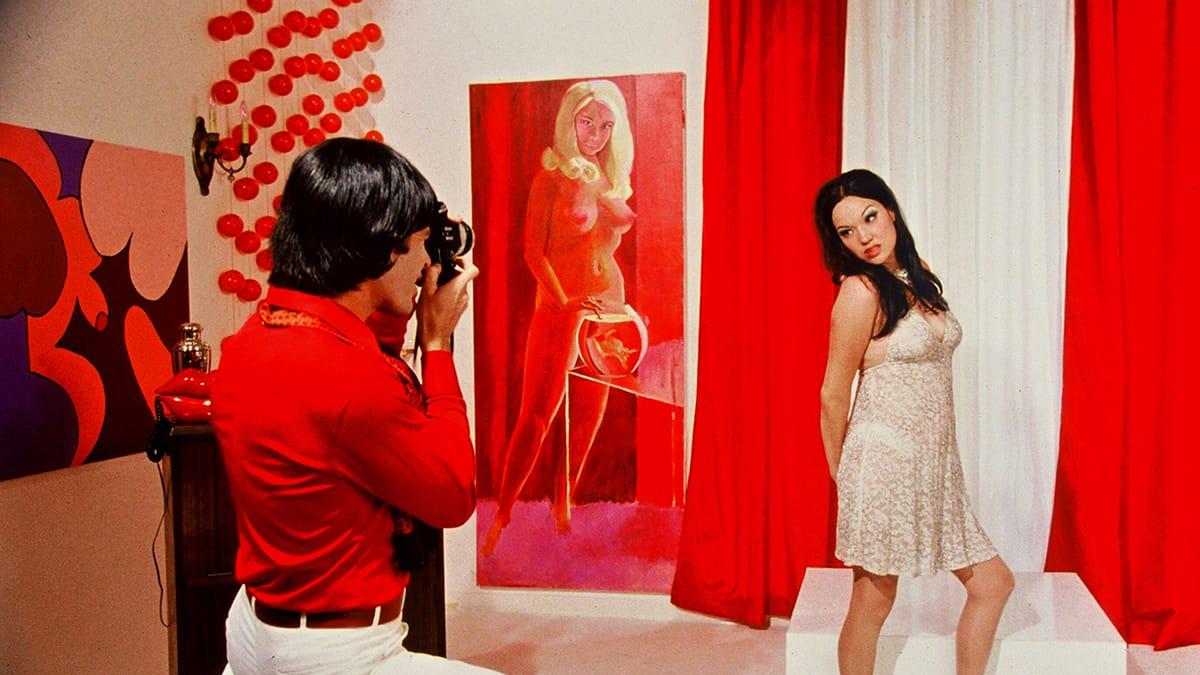
From The Love Witch to The Face of Horror, the debate surrounding Anna Biller’s cinema raises an uncomfortable question: are audiences becoming more fluent in the language of horror, or simply quicker to decide what everything means?
There is a peculiar fate that can await a horror filmmaker today, which is to be enthusiastically embraced for something they do not believe they have made.
An audience might whoop, cheer and laugh before applauding itself for recognising a joke known only to it, while the filmmaker wonders what happened to their dramatic tragedy.
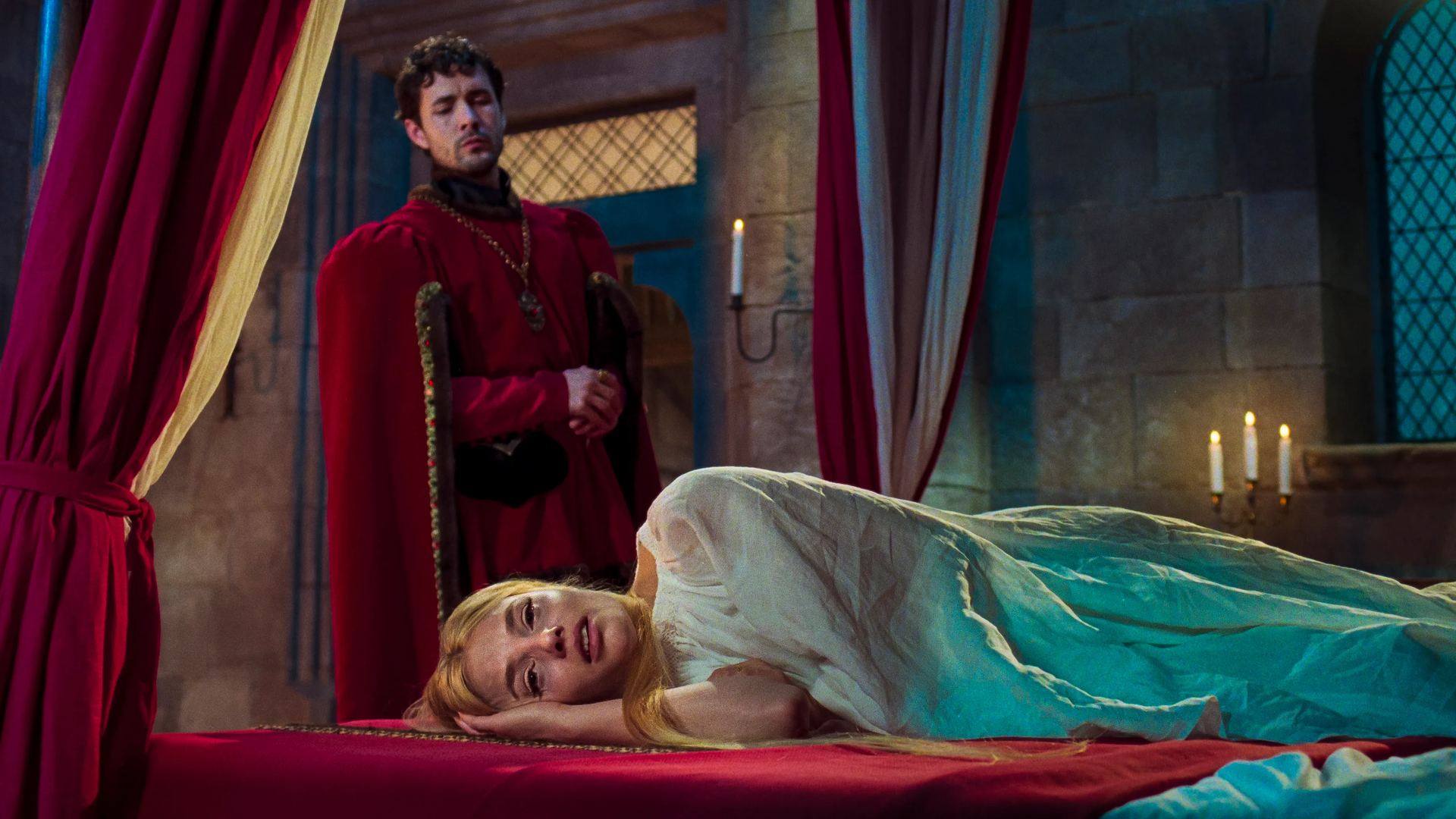
Something resembling this tension has emerged around Anna Biller’s The Face of Horror, which received its world premiere in TIFF’s Midnight Madness programme. In a subsequent interview with IndieWire, Biller resisted the interpretation of her medieval ghost story as camp, distinguishing that label from the tragic register in which she understood the film, often expressed with furrowed brows.
Meanwhile, online accounts from people who say they attended the Toronto screenings describe substantial laughter. Some also recall Biller discussing, at a later screening, her surprise at how strongly the premiere had played out as “comedy”.
The tempting explanation one might offer is that Biller simply misjudged her own material. Perhaps she did, but I doubt it. I think that there is another possibility worth considering: one in which the audience had already arrived with pre-formed habits of interpretation that encouraged it to turn Biller’s heightened sincerity into something comfortably recognisable.
Not necessarily something it disliked. Something it knew how to enjoy.
The distinction matters because a film can be admired and still be reduced for the wrong reasons.
An old misunderstanding in a different cultural setting
Let us convenience ourselves with a simple history… it goes like this: The Love Witch arrived in 2016 and was understood, while The Face of Horror arrived a decade later and encountered an audience that had forgotten how to watch films.
Unfortunately, the history is a little more complicated than that (otherwise this essay would end here and now).
In a 2017 interview with VODzilla, Biller was already expressing disappointment that more viewers had not approached The Love Witch as an ordinary, serious work of cinema. She also suggested that familiarity with films from different periods (let’s call that cinema literacy) had helped audiences understand what she was doing, rather than become distracted by its apparent strangeness compared to mainstream entertainment.
So that tension was present from the beginning. The next question was whether the intervening years had improved that situation or created new conditions that might complicate things further.
Biller’s recollections of The Love Witch’s early festival screenings offer a useful starting point. Speaking to SAGindie in 2016, she described its Rotterdam premiere as attracting a fairly mainstream, middle-aged audience rather than a specialist cult crowd. We can assume they were probably middle-class folks, drinking herbal tea, who had once owned… each of them… a classical music CD during their adolescence.
They appeared to enjoy and understand it! Most probably because when they referred to the film The Third Man, they probably envisaged the Carol Reed classic starring Orson Welles over the similarly named leaked video of me and Tom Sizemore in the filthiest suite of a Four Seasons hotel… but I digress.
Meanwhile, at Sitges, she was particularly struck by the enthusiasm for its Renaissance wedding sequence, one of the film’s more beautiful and romantic interludes, which might not ordinarily move the black hearts of troubled men wearing baseball caps backwards and faded screen-printed T-shirts of Freddy Krueger on a surfboard. (If that T-shirt does exist, please send one in.)
This means that those recollections complicate any easy dismissal of horror audiences. The genre crowd at Sitges were not demanding more blood or more fanboy horror references or clichés. In fact, according to Biller, they responded warmly to her departure from them.
Nor was the film’s original critical reception confined to aesthetic novelty. Richard Brody’s 2016 discussion in The New Yorker treated The Love Witch as an ambitious reworking of cinematic conventions, in which feminist ideas and handmade artistry were central to its achievement. Not bad at all!
But serious recognition and reductive recognition can still coexist. A film can enter critical discussion as a complex work among the intelligentsia while entering popular circulation as a meme, an awesooome costume or a set of instantly identifiable, repeatable gestures.
That is where the decade between the two films becomes especially important.
When a Film Forms a Cultural Identity
Before the Toronto premiere, Screen International’s coverage explicitly raised the prospect of The Face of Horror connecting with younger, TikTok-savvy viewers who might have discovered The Love Witch through social media years after its release; such was the cultural impact of that film.
This identifies an important possible difference in how audiences might approach Biller’s work.
Let’s consider two routes into the same film.
One viewer encounters it through a cinema programme, a review or a recommendation, then discovers its appearance and emotional language while watching.
Another encounters the appearance first: just a face with online commentary, a distinctive vintage costume, or an exquisitely composed image that screams retro, or a short scene detached from its cinematic surroundings. By the time the film itself arrives, the viewer may already possess a unique vocabulary for enjoying it, shaped by the way we engage today with social media and online commentary.
Neither route guarantees greater understanding, but… the second route creates a particular risk. The film’s reputation can begin to function as instructions for how to watch it.
It’s beautiful. Retro. Feminist. Artificial. Camp. Funny.
Once that sequence has settled into place, a new film by the same director may be interpreted through it before that new film has had much opportunity to establish its own terms.
The audience does not simply encounter a new Anna Biller film. It encounters the next expression of an Anna Biller aesthetic it believes it already understands. They apparently know Anna better than she knows herself; they know her influences, know her intentions and so forth.
This is one way success can become restrictive. The qualities through which a filmmaker becomes recognisable can also become the boundaries within which audiences expect that filmmaker to remain. God forbid that they might speak out against them.
And so, admiration can harden into cruel prescription.
When the audience performs its understanding
The screening environment introduces another complication.
Midnight Madness is not a recent invention of online fandom. TIFF dates the programme to 1988, some time soon after the Great War, so any account that simply blames “participatory” midnight culture may be historically misleading.
The issue is not that audiences suddenly discovered how to laugh together. It is what can happen when a highly communal fan community comes to a screening environment and meets a film whose tone is open to competing interpretations. Which is a very nice way of saying… let’s not go there.
So, while a laugh in the stalls can express surprise, delight, nervousness, affection or recognition, it can also become a signal to the rest of the room that… get ready for it. Drums, please. A signal to the rest of the audience that…
this is the kind of film we are watching.
Once that signal takes hold, subsequent scenes may arrive with their interpretation decided. A character’s entrance becomes funny before the character has spoken. A dramatic pause becomes an invitation to anticipate the next absurdity. Emotional excess is received not as emotion, but as evidence of the joke.
Biller is not alone in experiencing this phenomenon; I have experienced it myself as a filmmaker, but I shall save that story for another day!
So, let’s call it participatory camp, with the awful result that a portion of the audience does not merely recognise a film’s tone, but helps to establish and reinforce it.
There is nothing inherently objectionable about this, despite my griping. Collective pleasure is one of cinema’s great attractions. No sensible defence of serious filmmaking should require audiences to sit in dutiful silence, withholding laughter until the director grants permission.
But… the problem begins when one response crowds out every other possibility.
A film might invite us to find a character ridiculous and still recognise their suffering. It might make vanity funny without making the idea of desire meaningless. It might present an extravagant world without asking us to stand outside it and fixate on its aesthetic expression.
It is the distinction between the laughter that opens the film and the final laugh that closes it.
Biller had already put the underlying problem succinctly in a 2017 interview with Caution Spoilers:
“Audiences find conventions funny, but I use them because they’re effective at creating drama.”
This, arguably, is not simply a disagreement about whether something is amusing, but rather a disagreement about what cinematic conventions are allowed to do.
Knowing horror is not the same as knowing all of cinema
Another revealing aspect of the Toronto discussion concerns cinematic reference points. One attendee, writing on Reddit, recalled an exchange during the Q&A about Hammer and Roger Corman, and remembered Biller pointing instead towards Bergman and older New Wave films.
A viewer sees rich colour, theatrical acting, elaborate costumes and grotesque imagery, and reaches for a familiar category.
Hammer. Corman. Pastiche. Camp.
That recognition may be perfectly reasonable. It may even identify a genuine visual relationship. But recognising a resemblance is not the same as explaining its purpose.
Biller’s documented interests clearly extend beyond a narrowly defined horror tradition. In a Criterion discussion, she described the importance of Jacques Demy, including the relationship between his beautiful surfaces and darker emotional material.
Or put it like this… if you only ate fish and chips and tried to describe chilli con carne, you might use the language of fish and chips too often, despite both dishes being quite yummy.
But I digress. Her answer is not to pretend that her work has no relationship with horror history. In the SAGindie interview, Biller explicitly mentioned looking at Hammer films while preparing The Love Witch, alongside Hitchcock, Joseph Losey and other references. The problem is not making the connection. It is treating the connection as a complete account of the work.
And, well, categorising things is what fan communities love to do… a little too much. It is also where genre expertise can become a real limitation rather than an advantage.
An audience member may know an extraordinary amount about horror while remaining less familiar with other film traditions that use similar techniques for different purposes. Conversely, an arthouse enthusiast may possess an impressive vocabulary while failing to recognise the intelligence of popular genre filmmaking. I promise you, it does exist!
Neither education is complete simply because it is extensive, even if you own the full Nightmare on Elm Street documentary set.
When our reference points become too narrow, artificiality can become indistinguishable from camp. Theatricality becomes comic exaggeration. Melodrama becomes parody. The recognition of a style replaces the work of understanding it.
Just think of all the Akira Kurosawa fans who love the video essay they watched about his genius on YouTube but have yet to watch his films.
And, writing about this for Amicus, there is an additional point worth making. Hammer and Corman should not become the supposedly disreputable categories from which a serious filmmaker must be rescued.
The argument for taking Biller seriously should be an argument for taking horror seriously, not an application for her exemption from it.
If we defend the possibility of sincerity in heightened cinema, that defence should extend to the remarkable Vincent Price or Patrick Magee in The Masque of the Red Death, whose performances and exploration of religion and terror are as immediately respectable as the credentials of any film within the arthouse canon.
Otherwise, we are not broadening our understanding. We are merely rearranging the hierarchy of what counts as good cinema.
The comfort of assuming everything is a joke
Camp itself is not the enemy either. It can be intelligent, affectionate, emotionally expressive and artistically purposeful. Nor are camp, satire and tragedy necessarily sealed compartments which must never pollute one another.
What deserves scrutiny is the use of “camp” as an automatic explanation for anything conspicuously stylised.
A declaration of love is too elaborate. A costume is too beautiful. A villain is too extravagant. A performance is too committed to its own emotional reality.
Rather than asking what those choices make possible, we decide that their excess must be an invitation to amusement because many fan communities can fall prey to the simplicity of categorisation and simple recognition.
There is a peculiar comfort in that decision. To laugh at an extravagant emotion is to establish a safe distance from it. To accept the emotion, even provisionally, requires a different kind of participation which today most go to great lengths to avoid.
Just think of mainstream entertainment and its determination to be cynical, meta, and self-aware so that the audience can feel comfortable without feeling emotionally exposed. In the past, films were more expressive and theatrical because people felt real. Now, as we live our unreal lives on social media, we cling to a pastiche of naturalism today that presents everyone and everything in an idealised form of cynical self-awareness. No Waterloo Bridge required; we’ve got quips instead.
Despite this, there is no evidence that younger audiences are uniquely cynical, or that people who use TikTok cannot engage with melodrama.
It is a question about an interpretative habit that anyone can acquire like the common cold: the assumption that recognising artifice means seeing through it.
But artifice is not necessarily something to see through. Sometimes it is the means by which a film asks us to see.
A painted world can express a real fear. A mannered performance can communicate a recognisable desire. A romantic image can be both constructed and sincerely felt.
The important question is not whether the film looks or pretends to be natural. It is whether its chosen language is expressive.
This also helps explain why Biller’s objection should not be reduced to an objection to humour. In her IndieWire interview at TIFF, she associated “camp” with “failed seriousness”, revealing that the term itself carried an implication she resisted.
Of course, a viewer may use the same word as praise (and they often do in the horror genre), while the filmmaker may hear it as a refusal to acknowledge that the emotional register was deliberate.
The film must remain answerable, too
Of course… none of this gives a filmmaker ownership of the audience’s response. If only that were so, then my job as a producer would be much easier at the British Horror Studio.
Yes, intention matters, but it is not an instruction the viewer is obliged to obey and follow. A director can intend tragedy and create comedy. A performance can be deliberately heightened and still be poorly performed. Beautiful production design cannot settle whether a scene works the way it was intended.
Nor should discussion of audience habits become an ingenious way of explaining away every criticism.
The possibility that a screening environment amplified the humour does not eliminate the possibility that the film supplied abundant reasons to laugh. In Deadline’s TIFF discussion with the team, Jonah Hauer-King himself described comic qualities in his villainous character’s inability to achieve what he wants. Humour was not simply an invention imposed on the film by strangers. But… I do wonder what Biller’s expression looked like whenever he said that!
In fact, the more useful position allows several things to be true simultaneously.
Biller may have intended tragic seriousness. Her material may contain substantial comedy. A particular audience may have amplified that comedy. Some viewers may have understood the emotional intention and still found its execution unsuccessful.
None of those propositions automatically cancels the others.
Indeed, Peter Bradshaw’s review connected the film’s seriousness with its comedy and satire.
The question is therefore not whether audiences laughed.
Drum-roll.
It is whether the laughter left room for anything else.
What horror should ask of its audience
Of course, one premiere cannot prove that an entire audience has changed. Nor can the reactions to two different films, screened in different circumstances, isolate the influence of social media, festival programming or generational taste.
What Biller’s experience offers is not a definitive diagnosis, but an unusually revealing set of questions which filmmakers and perhaps audience members should consider.
What happens when a filmmaker’s reputation precedes the work so completely that it determines the terms on which the work is received?
What happens when genre knowledge becomes a system for sorting films rather than an invitation to investigate them?
And what happens when a community’s preferred way of enjoying cinema becomes an expectation that cinema must continually satisfy?
These questions matter beyond Biller. They concern the freedom of horror filmmakers to create work that does not merely confirm an audience’s relationship with horror.
A healthy genre community or culture should be capable of enjoying the familiar without demanding it. It should welcome films that are funny, grotesque, theatrical, romantic or absurd, while remaining open to the possibility that those qualities mean something different on this occasion.
The same willingness to suspend disbelief that allows us to accept a ghost should occasionally allow us to accept an extravagant emotion.
Without it, horror culture shall diminish, leading its greatest artists to use the genre as a brief stepping stone into drama or arthouse cinema.
There is no need to imagine an earlier golden age in which every audience understood every film.
In fact, the more modest ambition is actually the more useful one: to sit before the screen in a cinema or at home and to… remain curious for longer, and to let recognition become the beginning of interpretation rather than its fateful conclusion.
A filmmaker does not need to change a frame in their film for it to become a radically altered experience in a different auditorium. The audience does that…
And that begs the question of what the audience brings with it, and whether what bounds about in their heads leaves enough room for the film to answer back.
Horror does not need an audience that never laughs. It needs an audience that has not mistaken laughter for the only sophisticated response.
Further reading
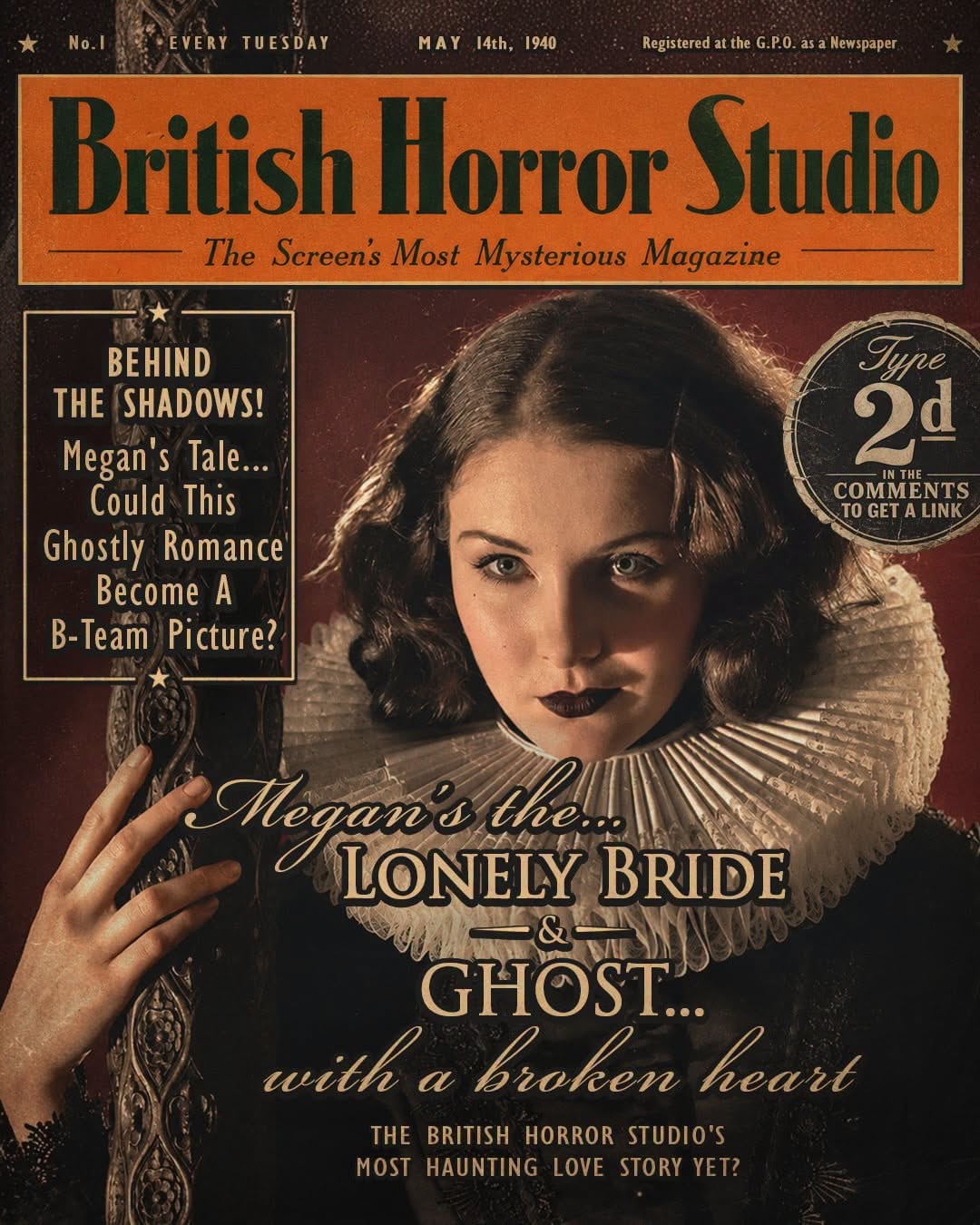
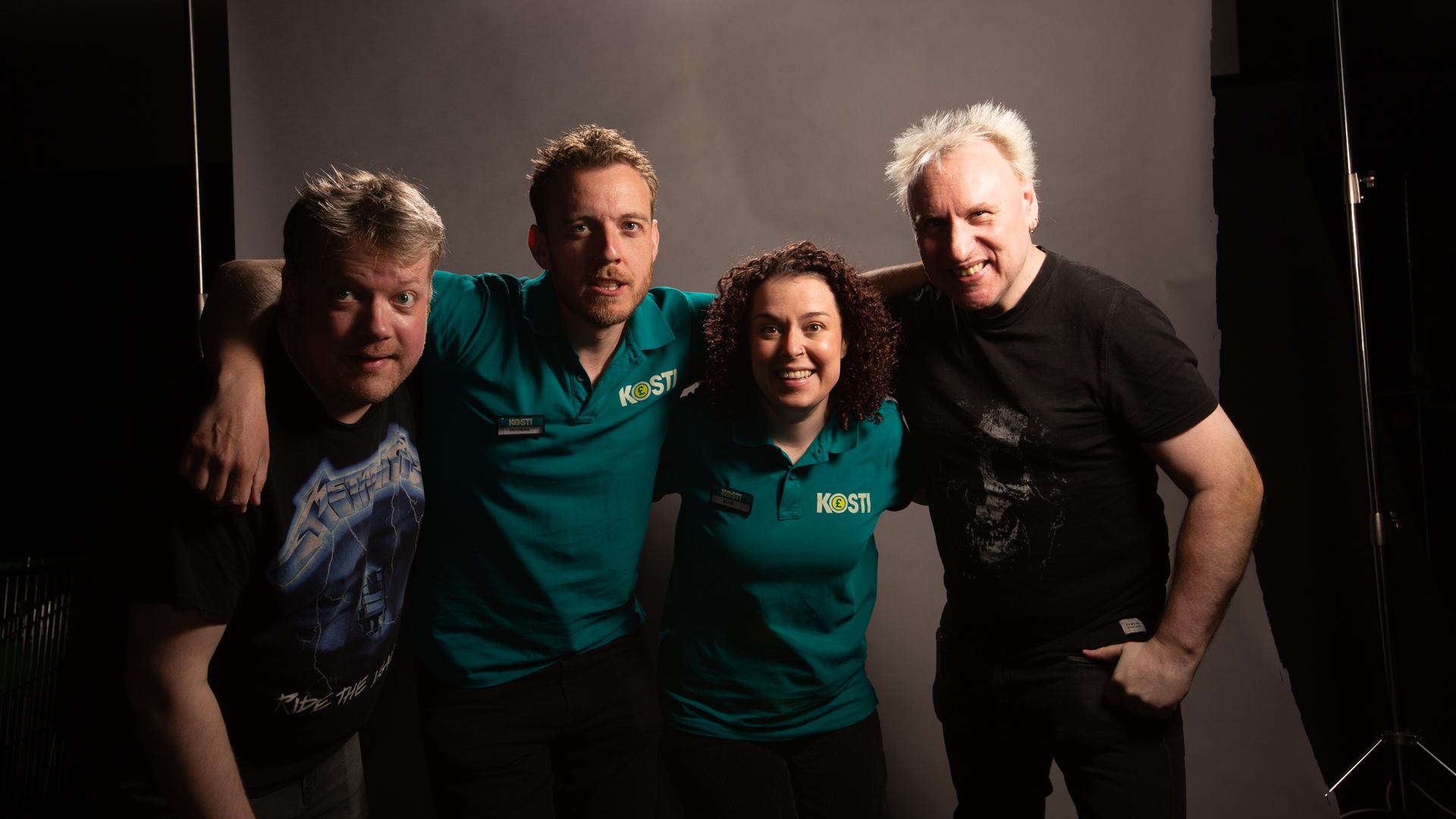
For another perspective on sincerity and genre expectations, read my interview with Aaron Truss about Employee of the Dead. Our discussion of Megan Tremethick, acting and theatrical craft also considers the value of performance and tradition in independent horror.
Recent articles in our sister publication, the British Horror Chronicle, explore Aaron Truss on friendship, memory and the filmmaker’s ambition and Megan Tremethick’s Instagram milestone and distinctive screen identity.
About Lawrie Brewster
Lawrie Brewster is a producer and director working in independent horror cinema. He leads the British Horror Studio, serves as President of Amicus Productions, and oversees the British Horror Studio community.
Read more articles by Lawrie Brewster on Amicus Horror.