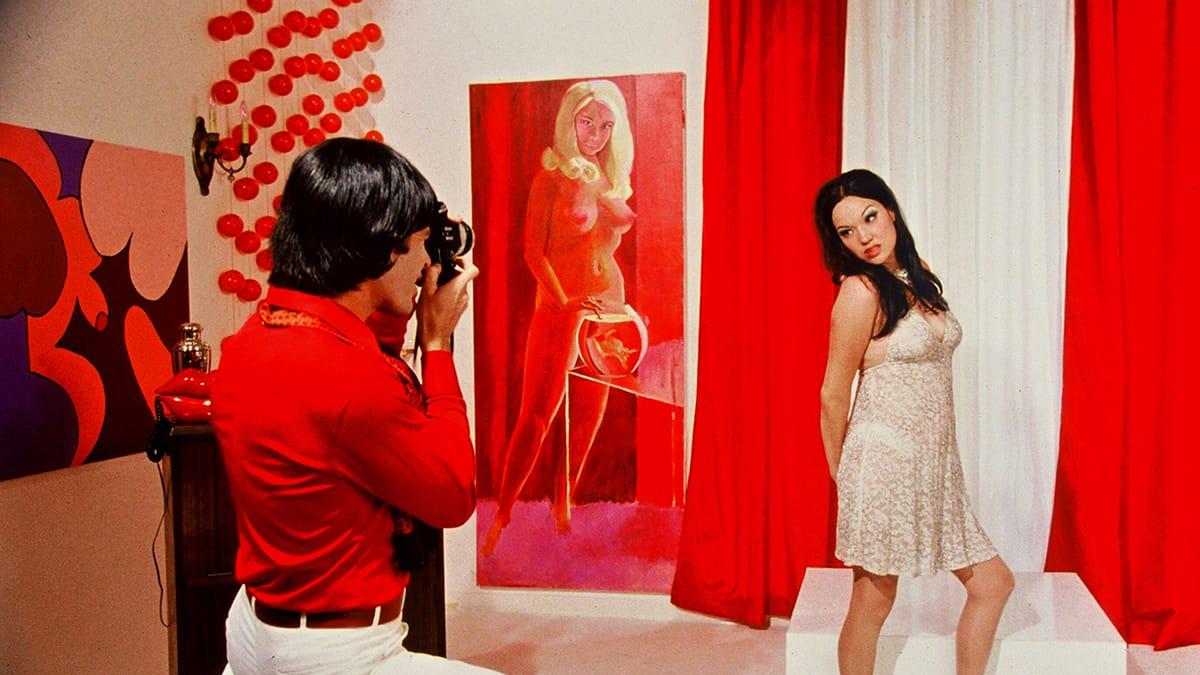
In Viva, Anna Biller created a world of feminine glamour, sexual discovery and… disquieting contradictions. Then she stepped straight into that world herself. And you know what? I think that extraordinary achievement deserves to be considered on its own terms.
When I first watched Viva, I was actually quite surprised to discover that the character with whom I identified most closely was Viva herself.
I expected to enjoy the costumes, the colours, the theatricality and the sensual extravagance. These are hardly things to which I require an introduction because, as a Scottish filmmaker with a fairly incurable romantic temperament, I was always likely to find something appealing in such a fantastical world.
That, and my having the probable jaded sensual appetites of an eighteenth-century aristocrat may also have played their part… And i digress!
Something had happened, that I had not anticipated, and that was the familiarity of the woman moving through that world.
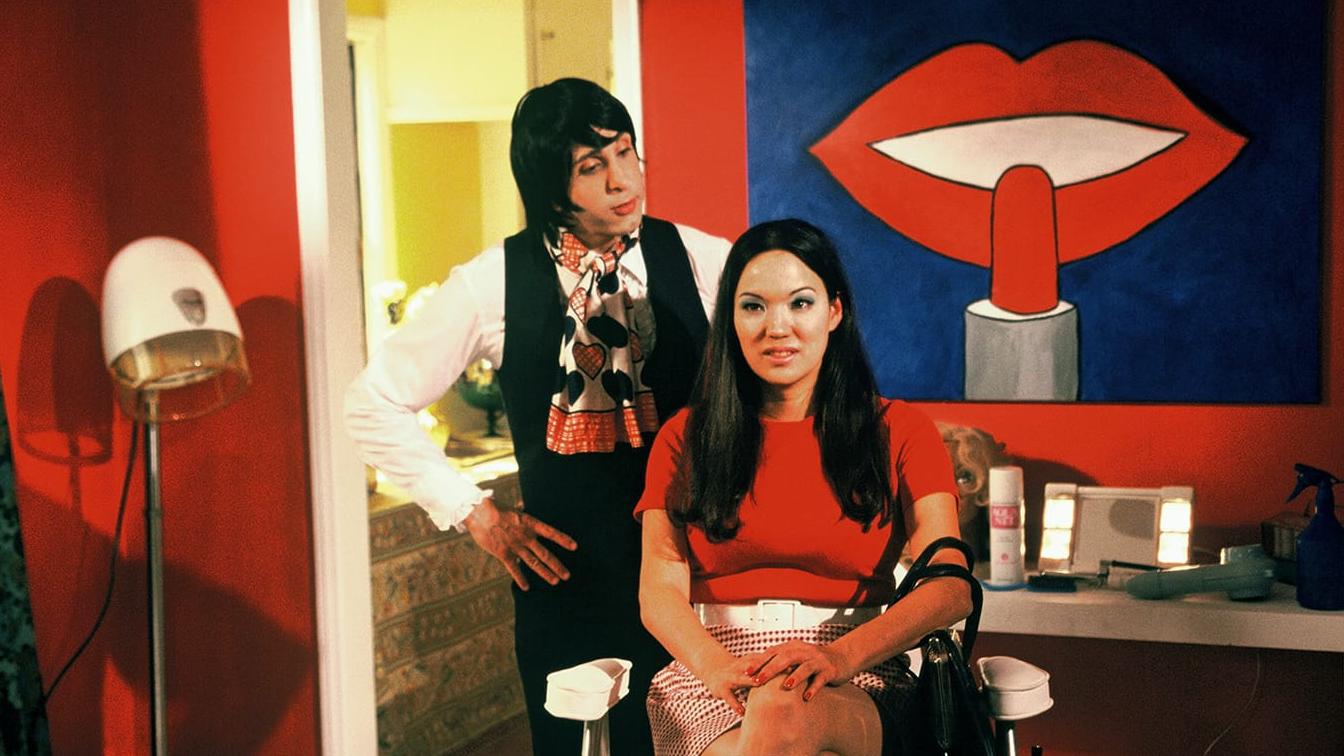
Anna Biller plays Barbi, a suburban wife whose excursions into the sexual revolution bring her into contact with rather more varieties of liberation than she might have wanted. Viva (2007) was Biller’s first feature, but certainly not her first filmmaking venture. While, earlier shorts had already established her keen interests in performance, fantasy and elaborate visual design.
Now, it might be easy to sup from a cup of tea and approach this film retrospectively as little more than the work that preceded The Love Witch. But that is not quite how I intend to approach it. Nor do I wish to make my affection for one film a disguised complaint about the other. I admire The Love Witch enormously.
Viva, however, offered me a particular kind of intimacy. And I want to talk about it.
This was actually the first Anna Biller film I saw, before The Love Witch or any of her short films. Before I began considering the extraordinary circumstances of its creation, I had already become a willing participant in its heroine’s journey.
That distinction matters I think because I did not first admire the filmmaker’s accomplishments and then persuade myself to care about the character she plays. That care came about through the accomplishments of Biller’s own performance.
It had already done the work.
Through a stained-glass window
What I recognised in Barbi was the uncertainty of someone trying to maintain a familiar equilibrium while suspecting that there might be forms of experience, sensuality and confidence to be gained beyond it. Her vulnerability, and what we might call naïvety, felt more recognisable to me than the assured confidence of the men around her.
This does not mean that I consider our experiences interchangeable. In my own relationships, I can recognise occasions when being a man lent my perspective an authority I had not necessarily earned.
But, you know… the suit, paisley-patterned tie, glass eye, peg-leg, pipe and fetish for black coffee may have helped with the impression.
Identifying with Barbi does not remove that distinction. All it means is that, while watching, I was more concerned with what she was discovering than with what the men around her might obtain.
In some regards, the experience reminded me of my early adolescent encounters with Nancy Friday’s books, in which women described their own sexual fantasies.
Er… yeah, I probably did not check that one out from the high school library.
What stayed with me was the encounter with an imaginative life being described from within, rather than supplied on a woman’s behalf, which was a real difference to me back then.
I have also generally been more drawn to the romantic possibilities of sensuality than to its presentation as mere conquest. The interest lies in the person imagining, anticipating and feeling, rather than in the successful gratification of an egotistical ambition.
We men can sometimes be like that with regards to sex, in case you did not know.
Meanwhile, Viva allowed me to recognise something familiar while encountering a perspective that was not my own.
And of course I brought other associations with me. The films of Russ Meyer came to mind, as did some of the bawdy British sex comedies of the 1960s and 1970s. I could even imagine Kitten Natividad sitting somewhere with a cocktail at one of Viva’s parties.
For me, there was even something of the peculiar sensual decadence of The Sentinel. A strange comparison indeed, but it nevertheless flickers somewhere in my subconscious.
These are descriptions of my experience, not instructions for categorising Biller’s film.
I am staring through a stained-glass window, and the colours are the films I have seen and the books I have read.
That window may illuminate something, but… it can also get in the way.
Biller herself has described constructing Viva from the language of Playboy cartoons and advertisements, placing a human being inside their contradictory promises. She has also resisted the assumption that this makes the film simply a homage or pastiche.
And, for goodness sake let us not forget that recognition of a familiar style is not necessarily recognition of what an artist is doing with it.
But, the real test for any creative work doing so is whether we remain interested long enough to notice the difference.
Anna Biller: the actress inside the image
For me, that difference is most immediately available in Biller’s performance.
There is an incredible earnestness to her Barbi which survives the remarkable extravagance around her. The delivery can suggest an exploitation film in one moment and a television melodrama in another. But I never feel that Biller has abandoned her character in order to congratulate the audience on recognising the reference.
She allows Barbi to believe in what she wants.
That is no small achievement in a film whose world offers so many opportunities for knowing amusement. Biller can make a situation funny without making her character’s desire for affection, adventure or recognition worthless. I might laugh at the social performance taking place around Barbi while remaining quite serious about her disappointment in the grave situations she encounters.
Her beauty and grace are part of this, but so is her ability to convey uncertainty without dissolving the film’s highly constructed atmosphere. To my weary Scottish eyes, her performance belongs completely to that atmosphere. It does not need to step outside it and become conventionally “naturalistic” before real emotion can be understood.
Biller has described Barbi as sexually tentative and Viva as confident, even predatory. Watching her negotiate those different registers is one of the film’s great pleasures.
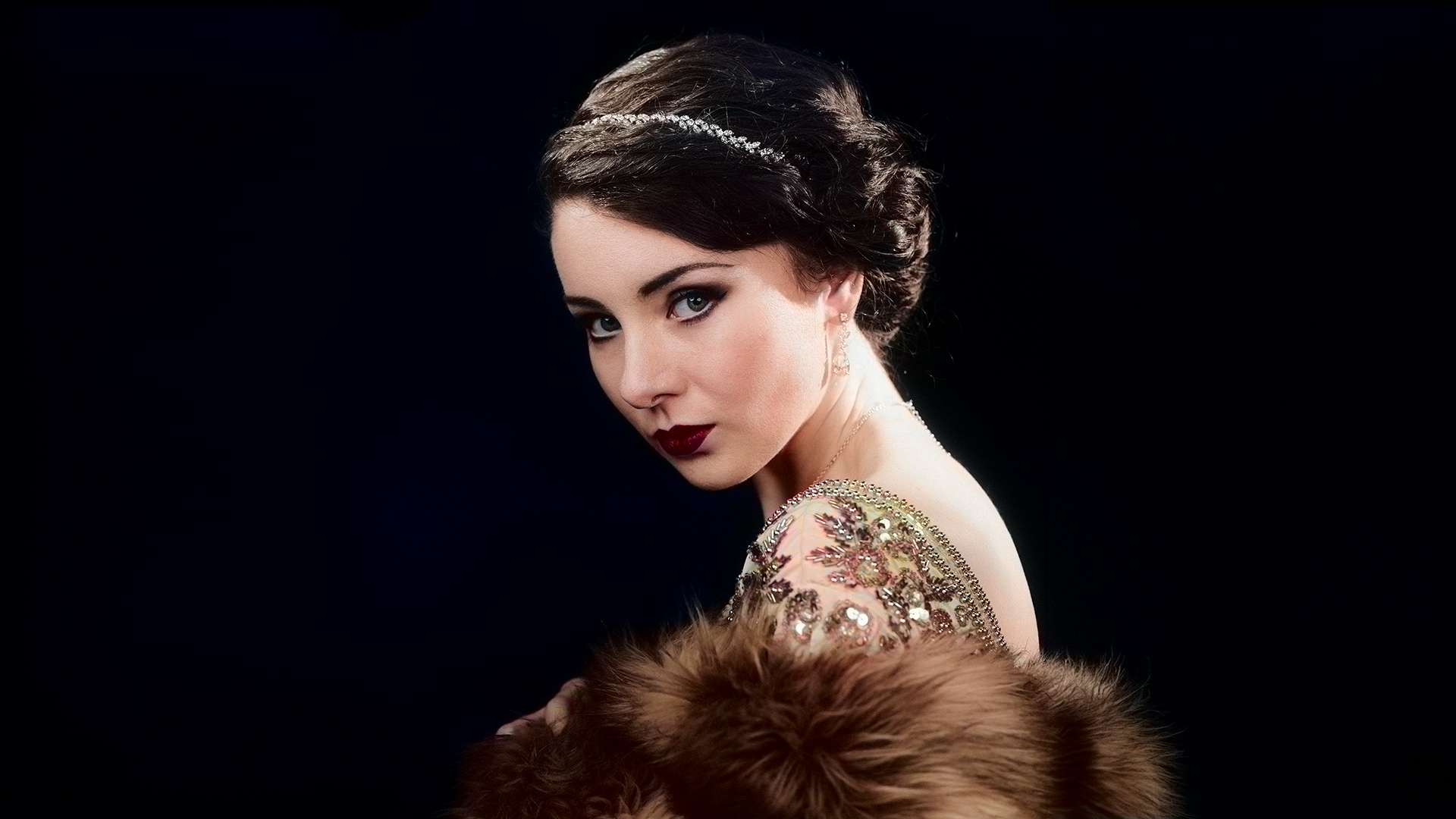
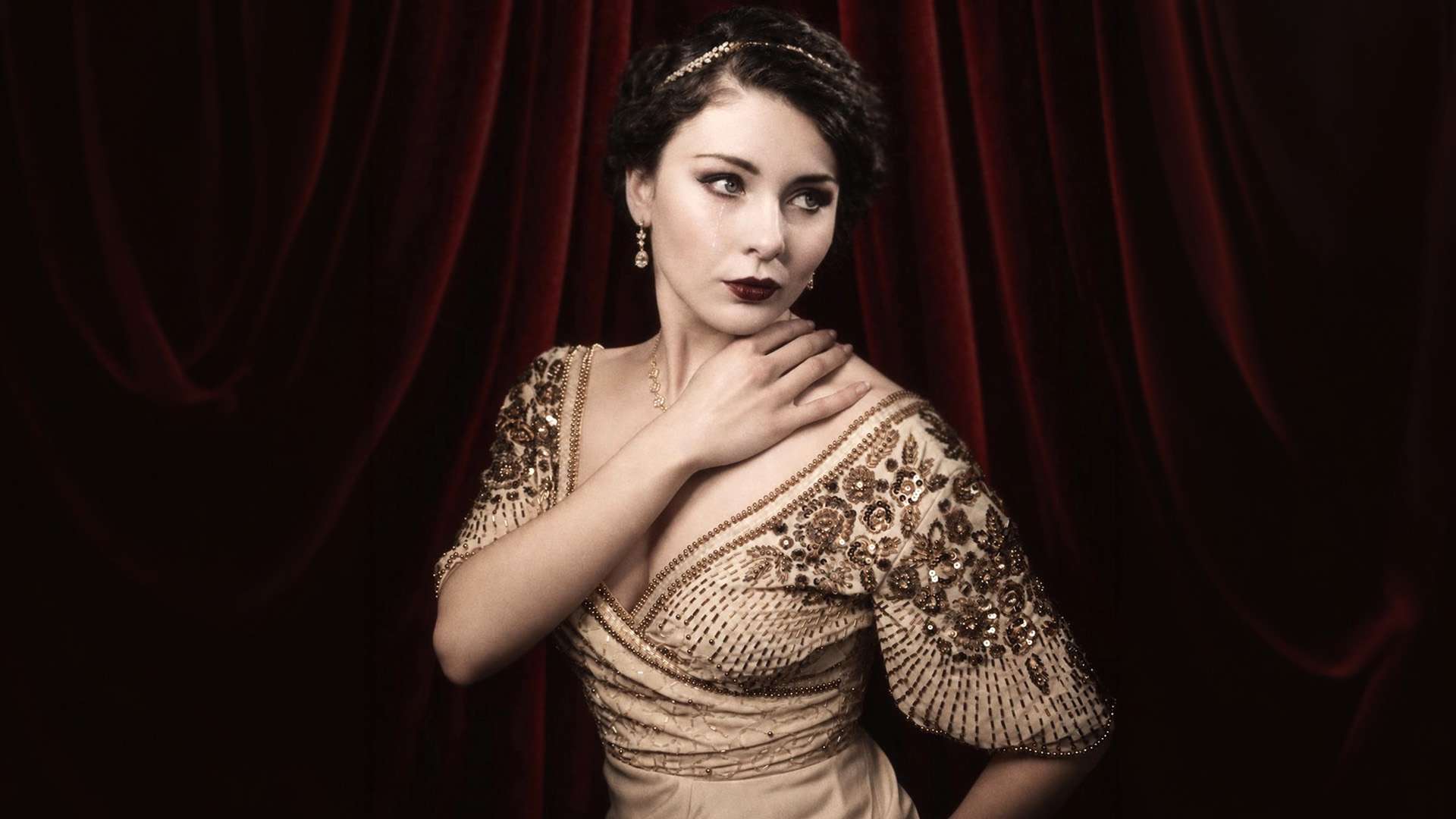
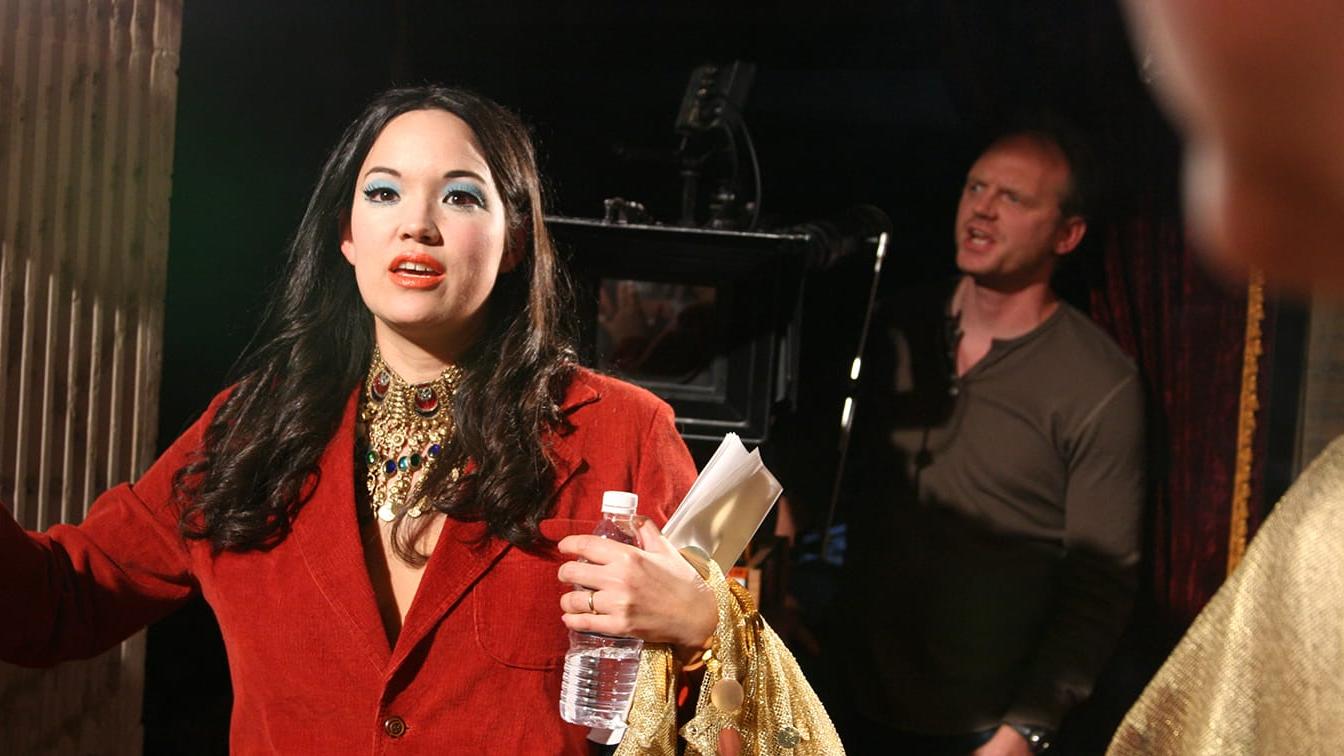
Let us consider the party performance in the spectacular gold costume and headdress. Biller explained that the ensemble combined an aspiration towards Elizabeth Taylor’s magnificent Cleopatra with a headdress drawn from Anna May Wong in Daughter of the Dragon.
It is a wonderful image, but the image matters to me because I have travelled with the woman who occupies it. The costume does not replace the character. Instead it becomes a new expression of her changing relationship with being seen.
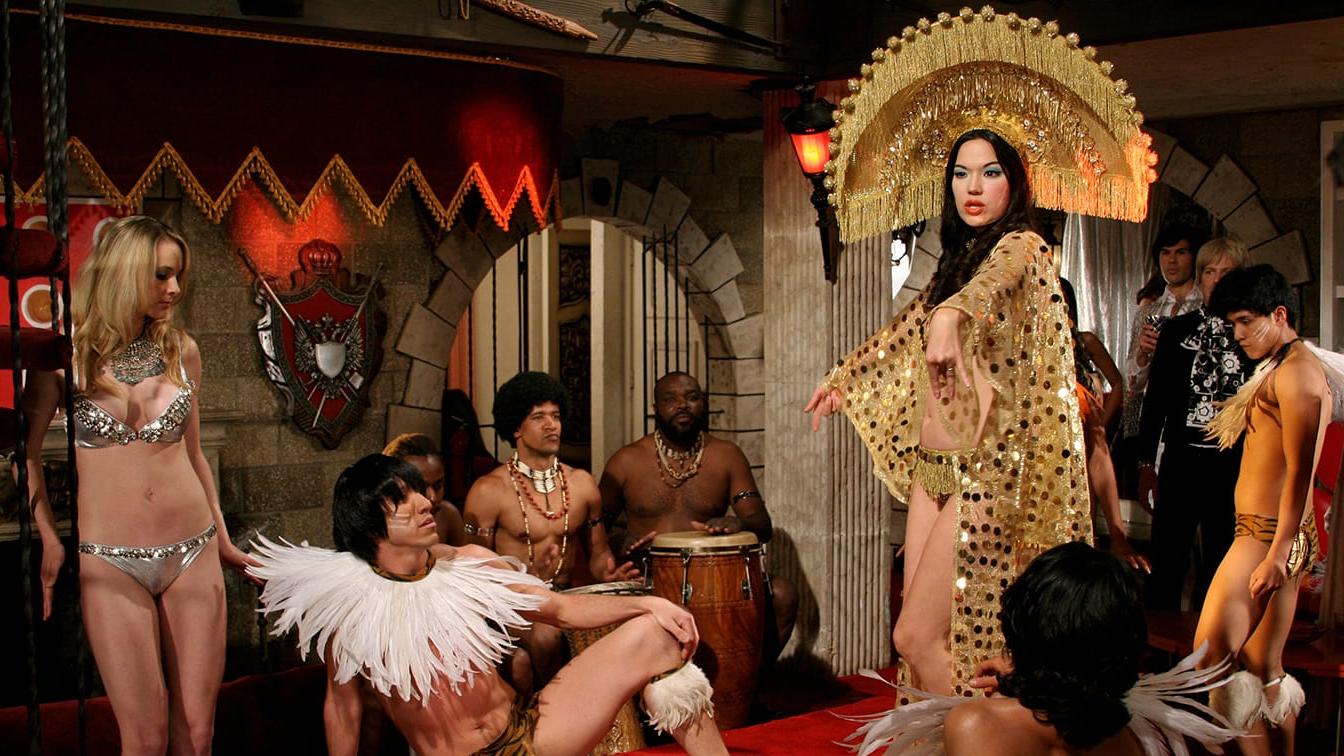
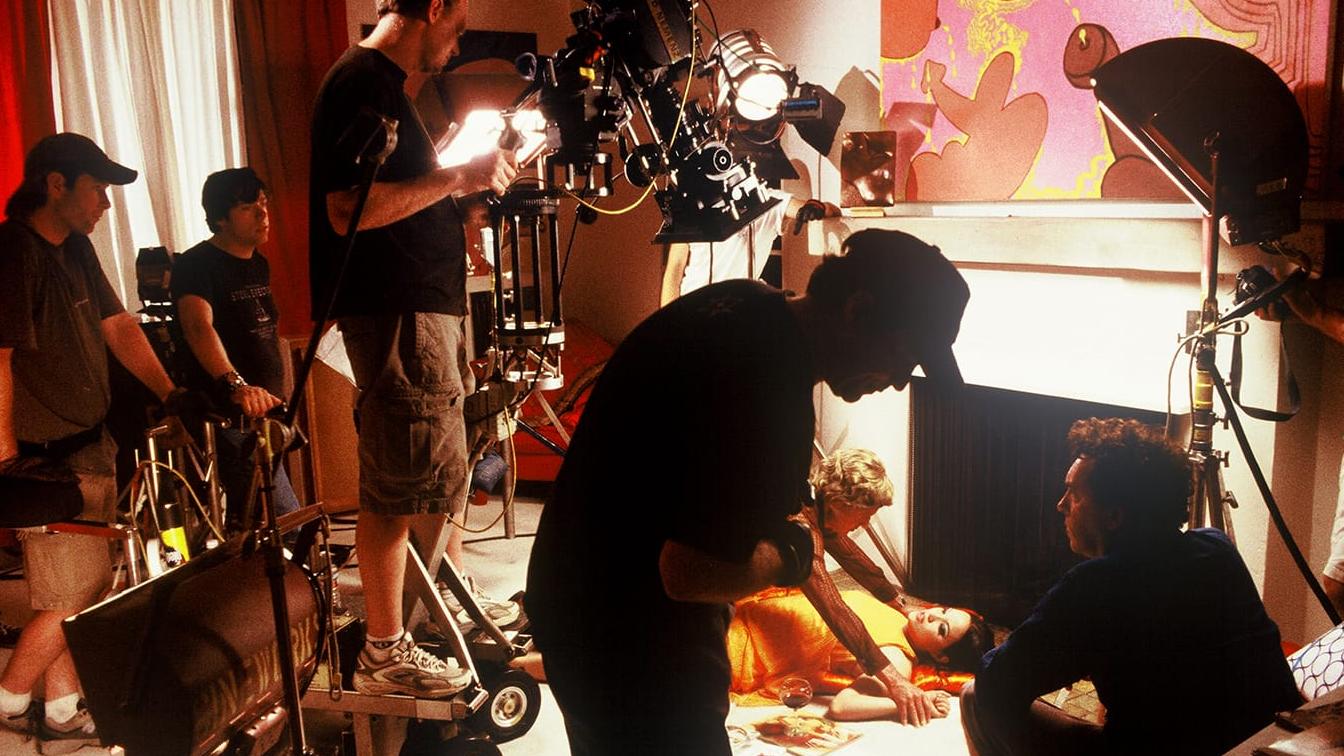
This was a collaborative film, not a solitary production, but the woman carrying that scene was also its writer, director, costume and set designer. As a filmmaker, I find that concentration of responsibilities astonishing. Creating and organising a scene is demanding enough without also having to become its emotional centre. The work of building the fantasy and the work of inhabiting it meet in the same person.
This is one reason why I would like more attention paid to Biller as an actress. Discussing her design work is entirely justified, but it can leave the person performing amid all that design strangely under-examined, or perhaps underappreciated.
Pleasure, and the terms upon which it is offered
I also find Viva erotic.
There seems little point in writing honestly about my response while politely removing that part of it. Its bodies, costumes, interiors and sensual atmosphere possess a genuine appeal. Biller herself is a compelling presence within them.
But erotic attraction was not an experience separate from my concern for Barbi. Sometimes it accompanied her growing confidence. At other times, the circumstances surrounding a sexual encounter made the scene almost unbearable rather than pleasurable.
Biller has spoken of wanting both to present female glamour and sexuality positively, from a woman’s perspective, and to examine the excessive, sometimes repulsive male world of Playboy. Those intentions are not identical, but neither are they necessarily incompatible.
Perhaps what unsettled me most was not actually the abuse Barbi encounters, but the apparent capacity of her world to proceed as though very little needs to be acknowledged.
The theatre director Arthur rapes her, yet later offers her an acting gig in his theatrical production. The continued association is what makes the film’s movement towards a musical conclusion so strangely uncomfortable.
I do not read that continuation as evidence that the abuse she experienced was inconsequential, or that her subsequent behaviour makes it acceptable. Rather, I felt the horror of a world in which such a violation could be absorbed into the ordinary social and professional arrangements of everyday life.
Something terrible has happened to her, but the wheels are still expected to keep turning.
It is a sort of nightmare that feels strangely familiar… especially on Sunday evenings!
For me, this makes the scenes of confident sensual expression more significant, not less. The distinction is not between a woman who displays herself and one who remains respectable. It is between experiences she can meaningfully direct and experiences in which her wishes are disregarded by others.
The film’s pleasure and discomfort therefore cannot be separated simply by counting how much clothing remains.
Nor would I want to replace the film’s complexity with a declaration that every glamorous image is liberating just because a woman created it. Authorship matters, but it does not settle every question about the image or how it will be received.
What interests me is Biller’s willingness to enter that difficulty without surrendering beauty and sensuality altogether.
In fact, I genuinely cannot think of that many filmmakers willing to dare it.
The artist as her own muse
My response is inevitably complicated by my own romantic attachment to the idea of the muse.
I have always been drawn towards women whose artistic presence seemed to promise access to something beyond ordinary experience. Kate Bush had that effect upon me. So did actresses such as Vivien Leigh and Bette Davis.
Later, while a film student, encountering Maya Deren’s work, particularly Meshes of the Afternoon and Ritual in Transfigured Time, challenged assumptions I had not even realised I was carrying about what a female filmmaker might see and express differently.
Now, I certainly do not mean that these women existed to improve my imagination. Their work simply revealed the limitations of it.
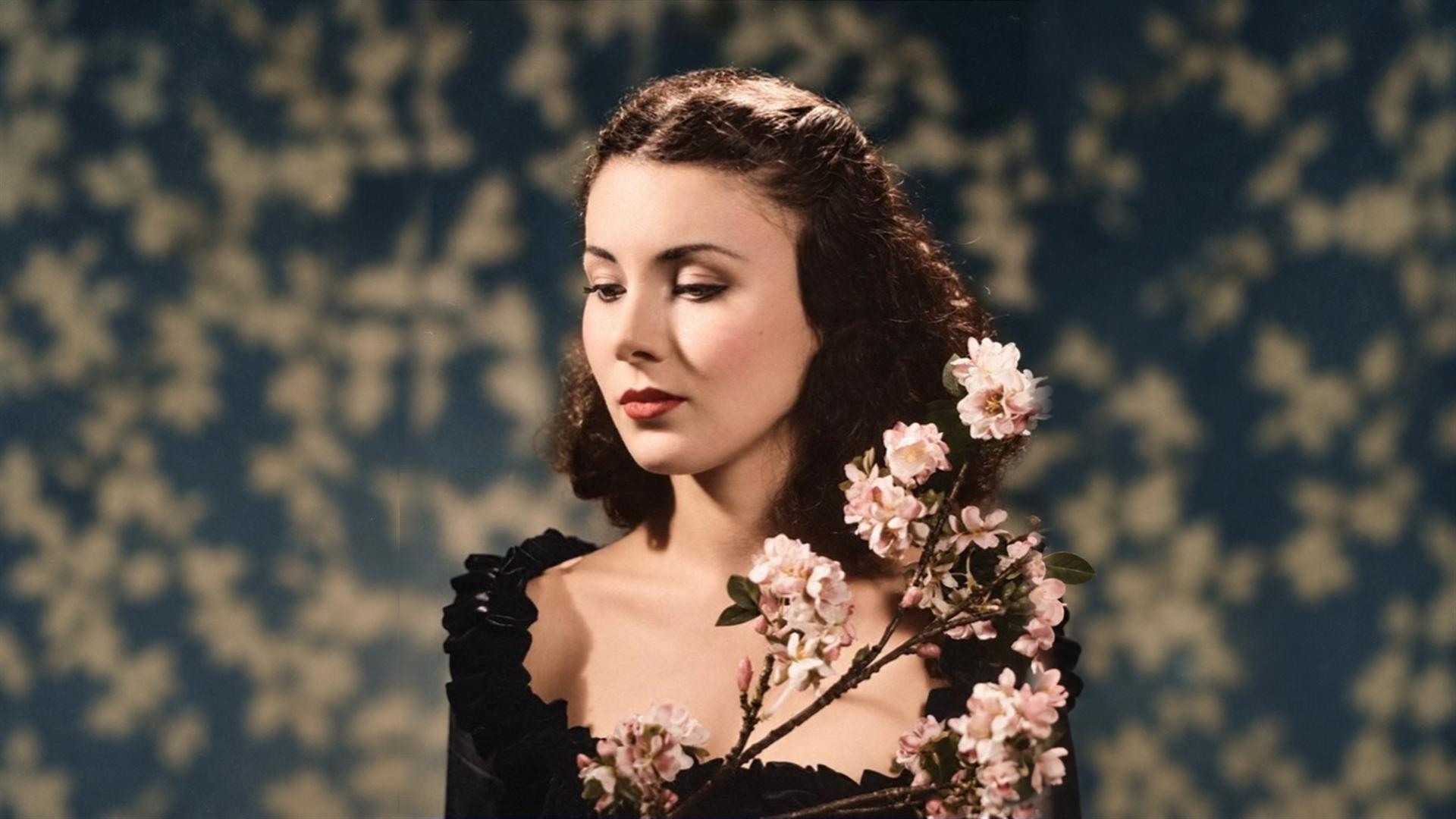
That distinction is important because the muse, as I understand the idea, is not someone whose purpose is to become an obedient expression of another artist’s wishes. The attraction is frequently towards someone whose imaginative life exceeds what one could supply oneself.
In my own modest Scottish capacity, I have often felt that my useful place is to recognise such people and help create the circumstances in which they can work. My admiration for Sarah Daly and Megan Tremethick, for example, begins with what they can originate, not simply with what they might embody for somebody else.
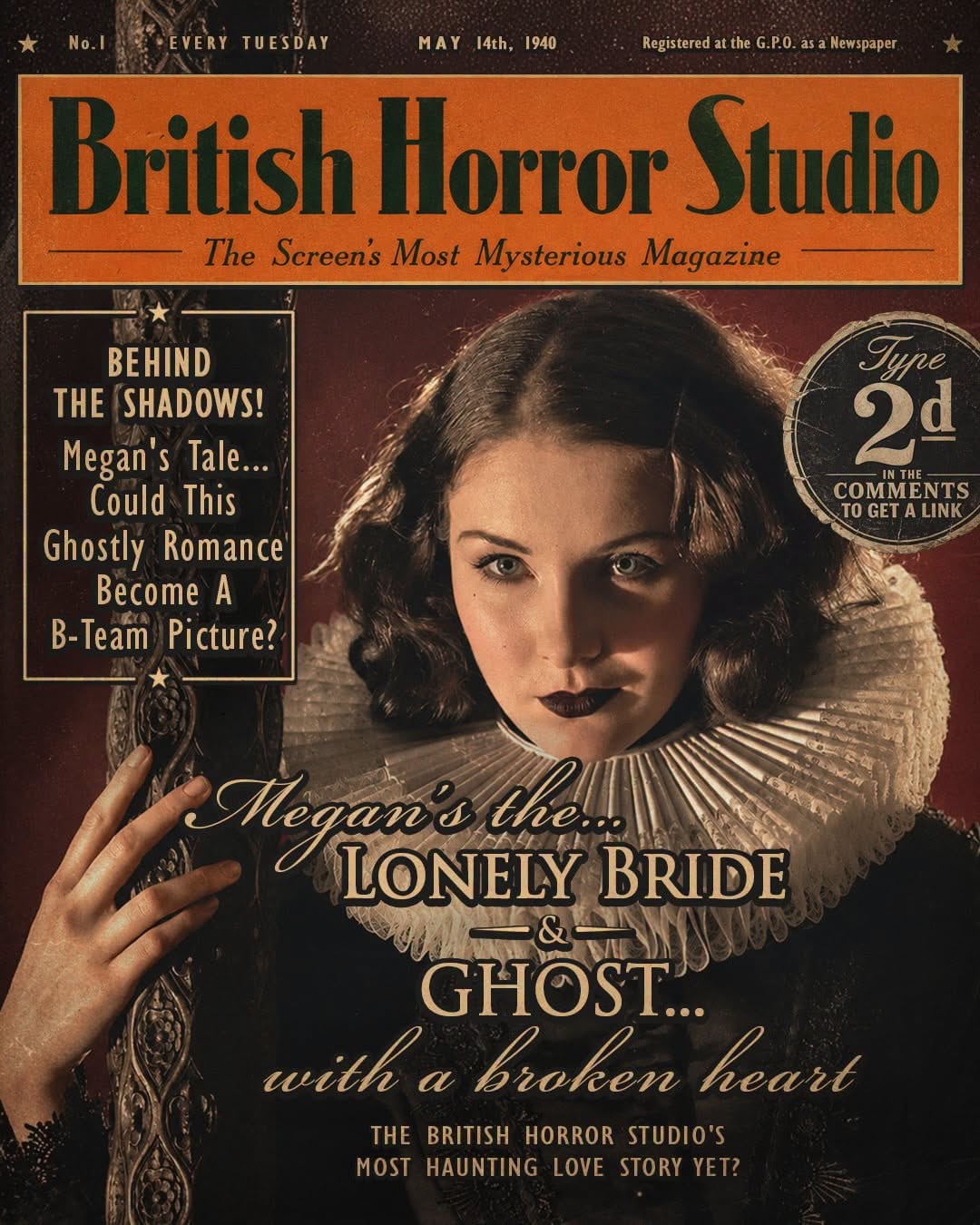
At the British Horror Studio, working with Megan has made me especially conscious of the difference between creating an image for an actress and developing one with her. Her preferences have changed the studio’s direction as much as the studio has helped shape her public image.
That does not make the process immune to bias. I am a male film producer, after all, with my own tastes, assumptions and a crazed addiction to Cadbury’s Chocolate Buttons. Particularly where sensual imagery is involved, our collaboration has become more clearly defined over time, with Megan’s preferences and boundaries more explicitly established.
Our shared enthusiasm for theatricality, Gothic romanticism, costume and classic cinema helped us move away from an emphasis on the “scream queen”, which never quite expressed the full range of her interests. Theatre, literature and classical performance were central to what she wanted to communicate. Giving those interests greater prominence changed the studio as well as her image.
We still love horror, but we increasingly understand it as seasoning rather than the entire recipe.
The Vivien Leigh comparison emerged from a shared enthusiasm, sharpened by revisiting Gone with the Wind, rather than an instruction from head office that Megan should become someone else.

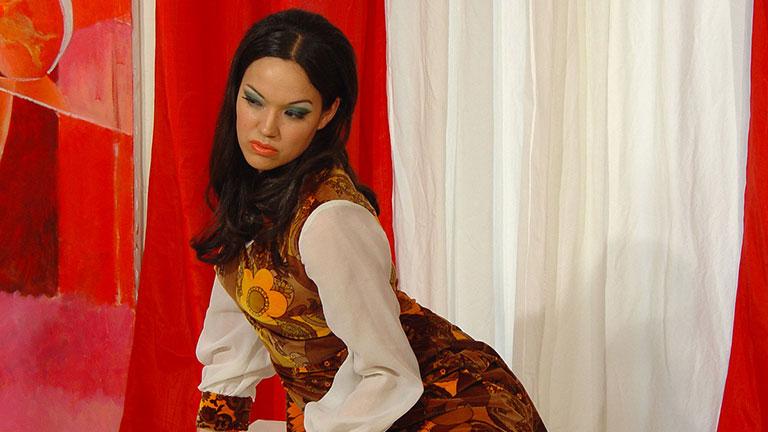
That is the practical experience through which I approach the idea of Biller as her own muse: an image becomes more interesting when the woman inhabiting it can also determine what it means.
Admiration can become reductive when it acquires a sense of entitlement, especially when another person’s appearance, time or creative decisions are expected to remain available to satisfy our preferred image.
Indeed, an image can be lovingly made… and still become a severe restriction.
In Viva, the woman at the centre of the image is also responsible for an extraordinary proportion of its creation.
And so, if the muse is a stepping ladder towards something we cannot reach alone, perhaps we sometimes forget that the artist can also discover those steps within herself.
In Biller’s case, the artist imagining the glamorous figure and the actress giving that figure life are the same person.
Glamour without an alibi
There is another reason this appeals to me: I want glamour to be allowed its sincerity.
When I watch Laurence Olivier and Merle Oberon in the 1939 Wuthering Heights, the heightened performances do not seem to require an apology before I can respond emotionally.
Nor do I think their appeal requires us to imagine that earlier audiences understood less about reality, the toughness of living, suffering or the material world. A stylised expression of feeling in a work of art was never necessarily an evasion of feeling.
Yet I keep encountering the assumption that the sophisticated response to conspicuous beauty or theatricality must be to place it in quotation marks.
Let us give the glamorous actress a beautiful ball gown and an enormous cheeseburger, along with a knowing wink. That way we can all relax.
Or let us get another lady in a Met Gala gown and place her behind the wheel of a monster truck. That way everybody understands. We are in on the joke.
Now, you know, there is not actually anything inherently wrong with either image. I would simply like the dress to be permitted an appearance without its accompanying “alibi”.
My objection is not to humour or irony. It is to the assumption that glamour must be undercut before we are allowed to take pleasure in it.
I find something rather odd about our tolerance for carefully constructed versions of ourselves on social media, alongside our suspicion of openly constructed romanticism in film. We can apparently accept a great deal of artifice, provided it does not admit to being artifice.
Folks can be remarkably tolerant of pretension when it calls itself authenticity, and remarkably suspicious of an image that admits it has been made.
That is a suspicion, not an official diagnosis of an entire generation. But it does inform my own work.
What I enjoy in Viva is that its humour does not exhaust my response to its glamour. I can recognise absurdity in the surrounding culture without feeling obliged to dismiss the pleasures of a costume, a performance or an image.
Neither a prototype nor a pedestal
All of this helps explain why Viva reaches me differently from The Love Witch.
With The Love Witch, I remain under the film’s spell, but I am more conscious of interpreting Elaine’s choices and considering what they reveal about her situation.
With Viva, I more readily find myself accompanying Barbi, sharing her uncertainty and wondering what she will encounter next. Its theatrical shifts, comic exaggerations and occasional bluntness feel compatible with the world it has established. I can admire the construction and then forget that I am admiring it.
This is a difference in my response, not a claim that one film possesses feelings and the other possesses ideas. Biller herself has described Viva as the more episodic and experimental work, contrasting it with the more classical narrative she sought in The Love Witch.
Nor does her decision to work with another lead actress make the latter film less personal by definition. Biller has discussed developing Elaine collaboratively with Samantha Robinson and revising the role around what their work together revealed.
The intimacy I find in Viva does not depend upon assuming that Barbi is Biller, or that the character’s experiences are disguised autobiography. A performance is still a performance. What is visible is the filmmaker’s extraordinary participation in the imaginative and physical demands of the work.
She does not merely direct somebody else through the sensual world she has conceived. She performs its uncertainty, its beauty, its confidence and its humiliations herself.
I regard that as an act of artistic courage. Not because nudity is automatically courageous, or because bodily exposure provides a certificate of seriousness, but because here that exposure belongs to a much larger commitment.
Her taste, humour, visual imagination and performance are all exposed to scrutiny at once.
I would not want to turn that achievement into a pedestal upon which Biller must stand for the rest of her career. God knows how frustrating it can be to be forever reminded of your initial glories while scrambling to make your next movie.
Filmmakers should be allowed to move on. An affectionate audience can still become another kind of restriction when it insists that every new work return to the circumstances of an earlier discovery.
So, my hope is somewhat simpler: that Viva be approached as a substantial work in its own right, and that its maker be appreciated not only as the intelligence arranging its images, but as a courageous actress who makes them emotionally persuasive.
Before The Love Witch, Anna Biller put herself inside the fantasy.
What surprised me was not merely that I wanted to look.
It was that I recognised something of myself in the woman looking back.
Further reading
For more on sincerity, style and the reception of Biller’s films, read Anna Biller and the Trouble with Calling Everything Camp. My conversation with Megan Tremethick about acting and theatrical craft explores some of the traditions discussed here.
Our sister publication, the British Horror Chronicle, also examines Megan Tremethick’s distinctive screen identity and the misreading of Wuthering Heights.
About Lawrie Brewster
Lawrie Brewster is a producer and director working in independent horror cinema. He leads the British Horror Studio, serves as President of Amicus Productions, and oversees the British Horror Studio community.
Watch more conversations on Lawrie Brewster Interviews, or read further articles by Lawrie Brewster on Amicus Horror.